Blue Food Trends: Why Ocean-Based Ingredients Are Growing Globally
In recent years, the global food industry has started paying much closer attention to a category now widely known as blue food. From seaweed and algae to marine minerals and ocean-based functional ingredients, consumers and manufacturers are increasingly exploring how the ocean can support future nutrition, sustainability, and wellness innovation.
The rise of ocean based ingredients is not simply a temporary food trend. It reflects broader changes in how people think about health, environmental impact, food sourcing, and long-term resource sustainability. As demand for cleaner formulations and sustainable nutrition grows, marine ingredients such as sea moss are becoming an important part of modern product development across wellness, beverages, supplements, and functional foods.
What Is the Blue Food Movement?
The term blue food generally refers to food and nutritional ingredients that originate from aquatic environments, including oceans, coastal ecosystems, and marine farming systems.
This includes:
- Sea moss
- Seaweed
- Algae
- Marine plants
- Sustainable seafood
- Ocean-derived minerals
Unlike many conventional agricultural systems that require large amounts of freshwater or land resources, many ocean based ingredients can grow within marine ecosystems while utilizing naturally available ocean nutrients.
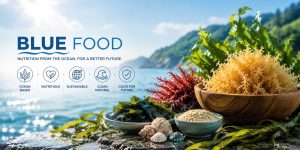
According to the World Resources Institute, blue foods are increasingly recognized for their potential role in supporting future global nutrition systems and sustainable food development.
As consumers become more aware of environmental concerns and ingredient sourcing transparency, marine ingredients are receiving growing attention from both wellness brands and food manufacturers worldwide.
Why Ocean-Based Ingredients Are Gaining Attention
One major reason behind the rise of ocean based ingredients is the increasing demand for products that combine nutrition with sustainability.
Modern consumers are no longer focused only on flavor or appearance. Many now evaluate:
- Ingredient sourcing
- Environmental impact
- Processing methods
- Long-term sustainability
- Functional nutritional value
Marine ingredients naturally fit into many of these conversations.
For example, sea moss contains naturally occurring polysaccharides such as carrageenan, which contribute to its gel-forming structure. Ocean plants also absorb minerals directly from marine environments, making them attractive for wellness-oriented food categories.
At the same time, many companies are searching for ingredients that align with “clean label” and natural formulation trends. This has helped accelerate global interest in blue food trends and marine wellness ingredients.
You can also explore our related article about marine ecosystems and sea moss sustainability here: Sea Moss and Marine Ecosystems: 4 Important Roles Beneath the Ocean
Sea Moss in Modern Wellness Trends
Among many marine ingredients, sea moss has become one of the most recognizable products within the global blue food movement.
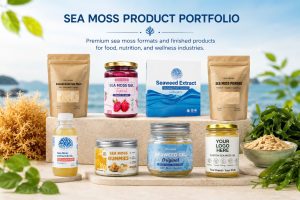 Sea moss is now commonly used in:
- Functional beverages
- Smoothies
- Wellness gels
- Plant-based formulations
- Nutritional blends
- Private label wellness products
Its popularity has grown especially fast in wellness communities focused on natural ingredients and ocean-based nutrition.
However, modern sea moss product development involves much more than simply blending raw ingredients together. Texture stability, cold storage behavior, ingredient compatibility, and processing methods all influence the final product quality.
Sustainability and Ocean-Based Nutrition
One reason the blue food movement continues gaining momentum is its connection to sustainability discussions.
Marine cultivation systems are increasingly studied for their role in:
- Supporting coastal economies
- Utilizing ocean resources efficiently
- Expanding alternative nutrition systems
- Reducing pressure on land-based agriculture
Certain marine plants can also participate in natural nutrient cycles within aquatic ecosystems. Because of this, researchers and environmental organizations continue exploring how ocean farming may contribute to future sustainable food systems.
Organizations such as the Food and Agriculture Organization (FAO) continue publishing research related to aquaculture, marine nutrition, and sustainable ocean resource development.
As global food demand increases, ocean-based ingredients may become an increasingly important category for future food innovation.
Seamoss Vietnam and Marine Ingredient Innovation
At Seamoss Vietnam, we focus on developing scalable sea moss and marine ingredient solutions suitable for:
- Wholesale distribution
- OEM manufacturing
- Private label partnerships
- Functional wellness products
We continue exploring ways to support modern wellness brands through stable formulations, ingredient consistency, and scalable production systems designed for long-term growth.
As global interest in ocean based ingredients continues increasing, we believe marine nutrition will remain an important part of future food innovation and sustainable wellness development.
Conclusion
The rise of blue food reflects changing global priorities around wellness, sustainability, and future nutrition systems. As consumers and manufacturers continue searching for natural, scalable, and ocean-based ingredients, marine products such as sea moss are becoming increasingly relevant across modern food and wellness markets.
The future of food innovation may not come only from land-based agriculture — it may also come from the ocean.