

Seamoss for Smoothies: 5 Practical Formulation Tips for Better Texture and Stability
Using seamoss for smoothies has become increasingly common in both consumer wellness products and commercial beverage development. Its neutral taste and natural gel-forming properties make it a versatile ingredient, especially in functional drinks. However, achieving consistent texture and stability requires more than simply blending ingredients together.
From a supplier and formulation perspective, seamoss behaves as a natural hydrocolloid. This means its performance depends on variables such as hydration level, concentration, processing method, and storage conditions. Without proper control, products using seamoss for smoothies may experience issues such as separation, inconsistent thickness, or reduced shelf stability.
For product developers and brands, understanding how seamoss gel performs in real production environments is essential to creating high-quality, scalable smoothie products.
1. Control Gel Concentration for Optimal Texture
One of the most critical factors when using seamoss for smoothies is controlling gel concentration. Seamoss gel acts as a natural thickening agent, but its impact on texture can vary significantly depending on how it is formulated.
In commercial applications, inconsistent gel ratios often lead to variation between batches. This can affect not only mouthfeel but also product stability and customer experience.
To achieve optimal results, suppliers and product developers typically:
* standardize gel-to-liquid ratios
* define target viscosity levels
* test formulations across multiple batches
* adjust concentration based on product format
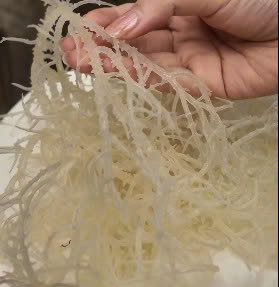
Maintaining consistent gel concentration ensures that seamoss for smoothies delivers a smooth, stable, and repeatable texture in both small-scale and large-scale production.
 |
 |
2. Use Proper Hydration and Preparation Methods
The performance of seamoss gel begins with proper preparation. Incomplete hydration or inconsistent blending can lead to uneven texture and reduced functionality in smoothie applications.
From a supply perspective, the way seamoss is processed before reaching the customer plays a key role in its final behavior. Poorly prepared gel may contain particles or inconsistencies that affect blending performance.
Best practices include:
* fully hydrating seamoss before blending
* using clean and controlled water sources
* blending to a uniform, smooth gel
* ensuring no residual solids remain
When properly prepared, seamoss for smoothies integrates more effectively with other ingredients and supports consistent product quality.
3. Balance Ingredients for Stability
A stable smoothie formulation requires careful balancing of all ingredients. When using seamoss for smoothies, the interaction between gel, liquid, and other components determines whether the product remains uniform over time.
In real production environments, instability often occurs when formulations are not properly balanced. This can lead to separation, inconsistent texture, or reduced shelf appeal.
To improve stability, it is important to:
* balance gel with liquids and fruit content
* avoid excessive dilution
* select compatible ingredients
* test product stability over time
👉 Related article: 5 Reasons to Combine Natural Fruit with Sea Moss Gel
A well-balanced formulation allows seamoss for smoothies to perform consistently across different product formats and storage conditions.
 |
 |
4. Manage Temperature and Storage Conditions
Temperature is a critical factor affecting the stability of seamoss-based smoothies. Variations in temperature can change gel viscosity, affect texture, and increase the risk of product degradation.
In commercial supply chains, maintaining stable temperature conditions is essential. This includes both storage and transportation stages.
* maintaining consistent cold storage
* avoiding temperature fluctuations
* managing cold chain logistics
* monitoring shelf stability
According to the Food and Agriculture Organization, temperature control is essential for maintaining food quality and safety. Source: https://www.fao.org/home/en

Proper temperature management ensures that seamoss for smoothies retains its intended texture and performance.
5. Optimize Blending Techniques for Consistency
Blending is a key step that directly impacts the final quality of a smoothie. Even with a well-designed formulation, improper blending can result in uneven distribution and inconsistent texture.
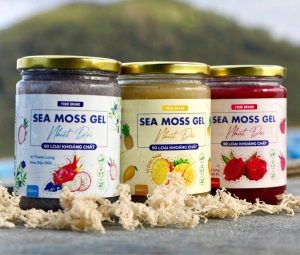
When working with seamoss for smoothies, blending should ensure full integration of the gel with other ingredients without breaking down the structure.
 |
 |
Effective blending practices include:
* using high-speed or industrial blending equipment
* adding ingredients in a controlled sequence
* avoiding under- or over-processing
* ensuring uniform distribution of gel
Consistent blending techniques help maintain the performance of seamoss for smoothies in both small-scale and commercial production.
How We Support Consistent Sea Moss Supply
From a supplier perspective, consistency is one of the most important factors in successful smoothie formulation. At SeamossVietnam, we focus on ensuring that both dried sea moss and sea moss gel meet stable quality standards for production use.
Our approach includes:
* maintaining consistent raw material sourcing
* controlling processing and gel preparation methods
* ensuring batch-to-batch consistency
* supporting both dried and gel formats for different applications
This allows our partners to use seamoss for smoothies with greater confidence, especially in large-scale production and product development.
Conclusion
Successfully using seamoss for smoothies requires a combination of proper formulation, controlled processing, and consistent supply quality. By managing gel concentration, preparation methods, ingredient balance, temperature, and blending techniques, businesses can significantly improve both texture and stability.
For brands and manufacturers, working with a reliable supplier plays a key role in ensuring that seamoss performs consistently across different products and production conditions.