Seamoss and Seaweed: Important Differences You Should Know
As seamoss products continue gaining attention in the global wellness industry, many consumers still confuse seamoss with general seaweed. While the two are closely related, they are not exactly the same.
Understanding the difference between seamoss and seaweed is important for consumers, wellness brands, and businesses developing marine-based wellness products. Both ingredients come from the ocean and are widely used in food and nutrition industries, but they differ in appearance, texture, applications, and market positioning.
What is Seamoss?
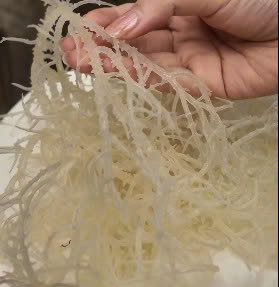
Sea moss is a specific type of marine algae commonly used in wellness and functional nutrition products. Unlike many traditional seaweeds used mainly for food, sea moss has become especially popular because of its soft texture and gel-forming properties.
 Today, sea moss is commonly found in:
- sea moss gel
- wellness drinks
- seaweed extract products
Sea moss naturally contains trace minerals such as iodine, magnesium, potassium, and calcium, which are commonly associated with nutritional wellness.
According to the National Institutes of Health, trace minerals play important roles in maintaining normal physiological functions and nutritional balance.
Because of these characteristics, sea moss has become increasingly popular in clean-label and wellness-focused product categories.
What is Seaweed?
Seaweed is a broader term used to describe many different types of marine algae found in oceans around the world.

This category includes several well-known varieties such as kelp, nori, wakame, and sea moss itself. In other words, sea moss is technically a type of seaweed, but not all seaweed is sea moss.
Traditional seaweed is commonly used in:
- food products
- snacks and soups
- cosmetic applications
Meanwhile, sea moss has developed a stronger association with modern wellness and functional nutrition products.
According to Food and Agriculture Organization, seaweed continues to play an increasingly important role in global food systems and marine industries.
Seamoss and Seaweed: Key differences
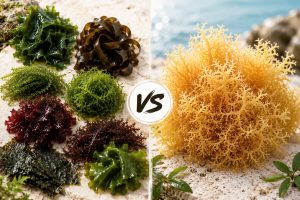
Appearance and texture
One of the easiest ways to understand the difference between sea moss vs seaweed is through appearance and texture. Sea moss typically has thinner branches and a softer structure, especially after soaking or being processed into gel form. Its naturally smooth and slightly gelatinous texture makes it suitable for wellness drinks, smoothies, and sea moss gel products.
Traditional seaweeds such as kelp or nori usually have flatter, leaf-like structures that are more commonly associated with culinary applications. These seaweeds are often used in soups, sushi, snacks, and other food products rather than wellness-focused formulations.
Product applications
Another major difference is how the two ingredients are used in the market. Sea moss has become strongly associated with wellness and functional nutrition products because of its texture and versatility.
Today, sea moss is commonly used in sea moss gel, seaweed extract products, wellness beverages, and smoothie formulations designed for modern lifestyles.
Traditional seaweed, on the other hand, is more widely connected to food preparation and industrial applications. Many types of seaweed are used as ingredients in packaged foods, seasonings, cosmetics, and agricultural products.
Consumer perception and wellness trends
Consumer perception has also created a clear distinction between sea moss and general seaweed. In recent years, sea moss has become increasingly popular among consumers interested in clean-label wellness products, plant-based lifestyles, and natural nutrition routines.
This growing wellness positioning has helped sea moss develop its own identity within the global wellness market, separate from traditional seaweed categories.
At the same time, traditional seaweed continues to remain highly important across global food industries because of its versatility, availability, and long history in culinary culture. Both ingredients offer unique advantages, but their positioning and applications continue to evolve differently in modern markets.
Why Seamoss is becoming more popular in wellness products
The popularity of sea moss has grown rapidly as consumers increasingly look for products that feel simpler, cleaner, and more natural.
Sea moss fits well within this trend because it can be used in multiple wellness formats while maintaining a clean-label image. Today, sea moss is commonly incorporated into wellness drinks, smoothies, and seaweed extract formulations designed for modern lifestyles.
According to Grand View Research, demand for plant-based wellness ingredients and functional nutrition products continues to grow globally.
This increasing demand has also created new opportunities for brands operating in the sea moss wholesale market.
How Seamoss Vietnam supports modern sea moss wellness brands
At Seamoss Vietnam, we focus on developing sea moss products designed for modern wellness brands and growing clean-label markets. Rather than creating overly complex formulations, our approach centers on simplicity, ingredient quality, and practical wellness applications that fit naturally into today’s consumer lifestyles.

Our product development process is built around stable sourcing and flexible formulations suitable for different wellness categories. This includes products such as:
* seaweed extract
* seamoss products: seamoss gel, seamoss extract, dried seamoss, …
* private label wellness solutions
We also understand that modern wellness businesses need more than just ingredients. Consistency, scalability, and brand positioning are increasingly important for long-term growth in competitive wellness markets. Because of this, we aim to provide solutions that support both product quality and commercial flexibility.
As a growing sea moss supplier Vietnam, Seamoss Vietnam continues supporting B2B partners looking to expand into natural wellness products, functional nutrition concepts, and sea moss wholesale opportunities for international markets.
Conclusion
Understanding the difference between sea moss and seaweed helps consumers and wellness brands make better decisions when choosing marine-based wellness ingredients.
While sea moss is technically a type of seaweed, it has developed its own distinct identity within the wellness industry because of its texture, versatility, and growing use in functional nutrition products.
At Seamoss Vietnam, we continue supporting the growing wellness market through premium sea moss products, seaweed extract solutions, and reliable sea moss wholesale supply for global B2B partners.