The Truth About Sea Moss Gel: Does It Really Contain Collagen?
One of the most common misconceptions in the wellness industry today is the belief that sea moss gel naturally contains collagen or acts as a direct “plant-based collagen” replacement.
This assumption often comes from the smooth texture of sea moss gel and its growing popularity in beauty-focused wellness routines. Because sea moss products are frequently associated with skin wellness, hydration, and healthy lifestyle trends, many consumers automatically connect the ingredient with collagen itself.
However, from a scientific perspective, the reality is more nuance.
Does Sea Moss Gel actually contain Collagen?
The short answer is no.
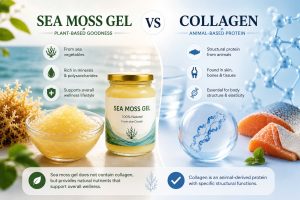
Collagen is a structural protein naturally found only in animal-based tissues such as:
- Fish skin
- Bovine tissue
- Animal connective tissue
- Marine animal collagen sources
Because sea moss originates from red marine algae, it does not naturally contain collagen protein.
This distinction is important for brands developing:
- Functional wellness beverages
- Marine nutrition products
- Sea moss supplements
- Private label beauty products
- Plant-based wellness formulations
Although sea moss gel does not contain collagen itself, it is still widely used in wellness-focused product categories because of its naturally occurring marine compounds and mineral profile.
According to the Cleveland Clinic, sea moss contains various minerals and naturally occurring compounds commonly associated with overall nutritional support.
Understanding the difference between “contains collagen” and “supports wellness routines” is essential for responsible product positioning in modern B2B wellness markets.
Why Sea Moss Gel is associated with Beauty and Wellness Trends
The connection between sea moss gel and beauty-focused wellness trends mainly comes from its naturally occurring marine polysaccharides and mineral composition.
Sea moss contains:
- Magnesium
- Potassium
- Calcium
- Trace marine minerals
- Natural red algae polysaccharides
One of the most important compound groups found in red seaweed is carrageenan-related polysaccharides, which contribute to the characteristic gel texture and water-binding behavior of sea moss gel.
These marine compounds are widely studied within food science and marine ingredient research because of their structural and functional properties in:
- Functional beverages
- Gel formulations
- Cold-processed wellness products
- Marine nutrition applications
The smooth and hydrating texture associated with sea moss gel comes primarily from these natural polysaccharides rather than collagen protein itself.
You can also explore our related article about formulation stability here: Sea Moss Gel Texture Explained: 3 Ingredients Behind Smooth and Stable Consistency
Marine Polysaccharides and Modern Wellness Product Development
As the global wellness industry evolves, marine ingredients are becoming increasingly important in modern product innovation. Many manufacturers are now exploring marine-derived compounds for:
- Texture systems
- Functional beverages
- Hydration-focused products
- Nutritional wellness categories
- Clean-label formulations
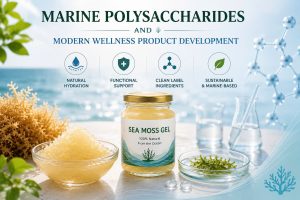
Natural marine polysaccharides from red algae continue attracting interest because of their ability to support stable textures and water-binding systems in modern formulations.
Organizations such as the National Center for Biotechnology Information (NCBI) have published research discussing seaweed polysaccharides and their potential functional roles in food and nutritional applications.
For B2B product developers, understanding ingredient functionality is increasingly important when designing scalable wellness products with stable texture and consistent processing performance.
Why accurate ingredient positioning matters for B2B Brands
As consumer awareness grows, brands are facing increased scrutiny regarding ingredient claims and product marketing language.
Using phrases such as:
- “Plant collagen”
- “Natural collagen replacement”
- “Collagen seaweed”
without scientific clarification may create confusion in the marketplace.
Today’s consumers increasingly value:
- Transparent ingredient communication
- Evidence-based wellness positioning
- Scientifically responsible marketing
- Clean and understandable formulations
For this reason, many modern wellness brands are shifting toward educational messaging focused on:
- Marine nutrition
- Mineral-rich ingredients
- Natural polysaccharides
- Functional formulation systems
- Sustainable wellness sourcing
This approach helps brands build stronger long-term trust while supporting more sustainable product growth.
You may also explore our related article about marine wellness trends here: Blue Food — Why Ocean-Based Ingredients Are Growing Globally
Seamoss Vietnam — Supporting Modern Sea Moss Product Development
At Seamoss Vietnam, we focus on scalable sea moss ingredient solutions designed for:
- Wholesale distribution
- OEM manufacturing
- Private label wellness brands
- Functional beverage development
- Marine wellness product innovation
Our goal is not to position sea moss as a “miracle ingredient,” but to support brands through scientifically responsible formulation development and stable marine ingredient sourcing.
We believe the future of marine wellness products depends on:
- Ingredient transparency
- Stable formulations
- Sustainable sourcing
- Scalable production systems
- Long-term product consistency
As global interest in marine nutrition continues growing, sea moss will likely remain an important ingredient category within wellness, functional food, and ocean-based product innovation.
Conclusion
Sea moss gel is not a natural source of collagen, nor is it a direct replacement for animal-derived collagen proteins. However, its naturally occurring marine polysaccharides, mineral composition, and formulation versatility continue making it a valuable ingredient in modern wellness product development.
For B2B brands, understanding the real science behind sea moss allows for more responsible positioning, stronger consumer trust, and better long-term product strategy.
In today’s wellness industry, sustainable growth comes not from exaggerated claims — but from transparent ingredients and scientifically informed formulation.